

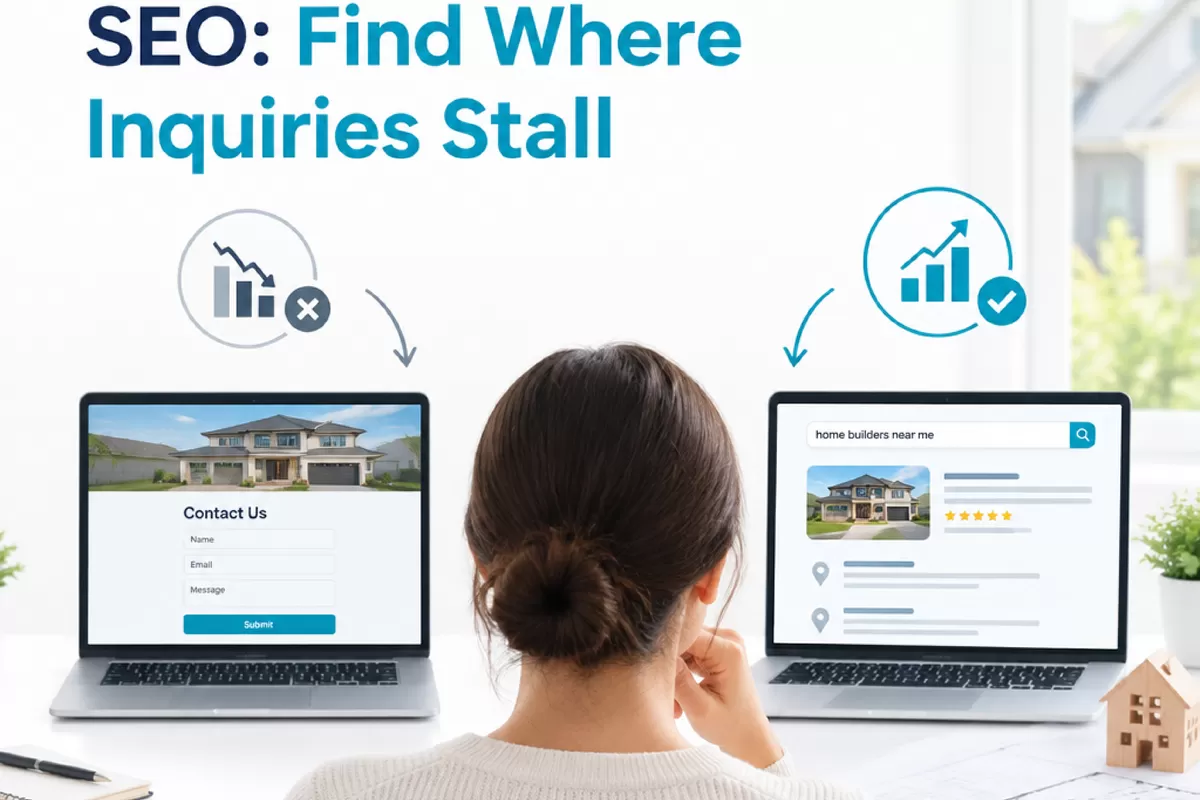
 For a home builder in the United States, more search visits do not necessarily mean more prospective buyers are getting in touch. A visitor might be researching floor plans, comparing communities, or trying to find move-in-ready homes, then leave without taking the next step. Home builder SEO is easier to assess when you follow that path, from the search a buyer makes to the page they land on and the contact option they see. A focused review can show whether the right pages answer buyer questions and make it clear how to request details or schedule a visit.
The goal is not to treat every visit as a lead. It is to understand which pages attract people with relevant questions, what they need before contacting a builder, and where the path becomes unclear. That gives your team a practical way to decide what to investigate and improve next.
Start with the buyer action you want each page to support
Before reviewing rankings or traffic, define the next action that makes sense for the page. A visitor on a community page may want to check available homes or book a tour. Someone reading about the building process may need to ask a question or request a consultation. A page about a specific floor plan should help that visitor review the layout, understand what is included, and find a clear way to ask about it.
These actions are different, so avoid giving every page the same broad goal. “Contact us” may be appropriate for a general inquiry page, but a buyer comparing homes often needs a more specific next step. Consider whether the page should help someone:
- View available homes or current community details.
- Ask about a floor plan, home features, or build options.
- Schedule a visit to a model home or community.
- Request information about the building process or next steps.
Choose an action based on the page’s purpose, not on what is easiest to measure. A useful inquiry is one that reflects a real buyer need. Form submissions can help you observe behavior, but they do not tell the whole story. A visitor may call, use a map listing, or return later through a different channel. Keep those limits in mind when judging whether search activity is contributing to buyer conversations.
Review the pages that support U.S. home searches
In the United States, home searches often include a city, neighborhood, community name, home type, or a phrase such as “new construction homes near me.” The search result should lead to a page that matches the query. A city page that only repeats the location name, for example, may not give a buyer enough detail to compare communities or decide whether to inquire.
Review the landing pages that matter to your business: community and location pages, available-home listings, floor plan pages, and service or process pages. For each one, ask whether the visitor can quickly answer basic questions. Is the location clear? Are home types and relevant features described? Can a visitor find current availability or understand how to confirm it? Does the page explain what happens after someone requests information?
Local search details need to agree across your site and business profiles. Check that your business name, address, and phone number are consistent where they appear, and keep your Google Business Profile accurate if your business is eligible for one. A profile can help people find directions, call, or review local information, but it does not replace useful pages on your website. Service areas and community locations should be described accurately. Do not create thin pages for places you do not serve just to target more “near me” searches.
Reviews can help prospective buyers evaluate a builder, but they should be genuine and handled in line with platform policies. Invite customers to share honest feedback without scripting their comments. When reviewing a page, also consider whether the information is current. Outdated availability, unclear community details, or mismatched contact information can undermine trust even if the page earns search visits.
Check whether the inquiry steps are clear
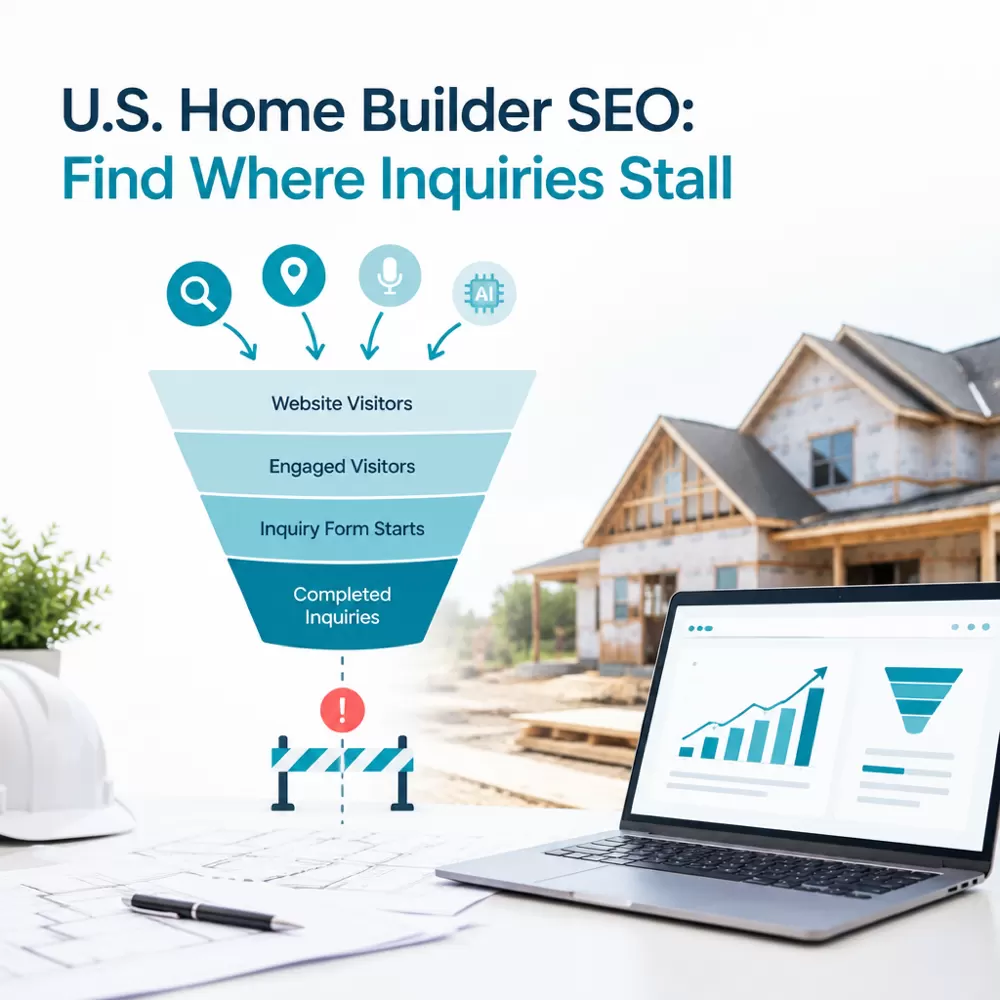
Once you know what action a page should support, follow the path as a buyer would. Start from the page on a phone as well as a desktop. Look for the contact option without scrolling through unrelated material. Test whether buttons work, forms load, and required fields are reasonable. If a form asks for details, explain why they are needed and what the buyer can expect after submitting it.
Clarity matters as much as visibility. A button labeled “Learn more” may not tell a visitor whether it opens a floor plan, starts a message, or requests a tour. Use labels that describe the action, such as “Ask about this home” or “Schedule a community visit,” when those actions are available. Do not suggest that a visitor can book or view something if your team cannot reliably provide it.
Look for friction between the page promise and the contact step. If a visitor arrives to ask about a particular home, a generic form that loses the home or community context can make follow-up harder. Where practical, preserve that context in the form or provide a clear field for it. Confirm that submissions reach the right staff member and that the team knows how to respond. SEO can bring someone to the door; a broken form or unclear handoff can still interrupt the inquiry.
Use a home builder SEO audit to choose what to investigate next
An audit is a structured review, not proof that a single change will produce more leads. Gather the pages you want to assess, the searches they are meant to serve, and the buyer action each page supports. Then inspect search visibility, landing-page relevance, local details, and the contact path. If analytics tools are available, check how people reach those pages and whether they continue to a contact step. Verify that measurement is configured correctly before treating the numbers as reliable.
For a broader view of search work, learn about home builder seo alongside SEO, answer-engine optimization, and generative-engine optimization services. SEO Deep Insights describes work across industries and countries and offers a free proposal with a practical next step within 24 hours. That is context for evaluating possible support, not a promise of builder-specific experience or lead results.
Turn findings into questions your team can act on. If a relevant page receives little search visibility, investigate its content, technical accessibility, and fit with the searches it is meant to serve. If it attracts visits but buyers do not reach the contact step, review the page’s usefulness, calls to action, and form experience. If local information conflicts, identify which business details need correction first.
Prioritize changes by buyer impact and evidence, then check the affected pages again after updates. Keep a record of what changed and when. This makes it easier to distinguish a real improvement from a seasonal shift in demand or a tracking issue. The most useful home builder SEO review does not promise a certain number of inquiries. It gives you a clearer view of the route from search to contact, and a sensible next question to investigate.
