

Introduction
A T20 match lasts about three and a half hours, but the dressing room is busy for much longer. The players arrive hours before the first ball, and they leave hours after the last one, and in between, the dressing room is where the match is won and lost. It is where the team meets, where the captain talks, where the physio works, where the phones are handed in, and where the players wait, watch, and worry. Fans who follow the game with a SkyExchange ID will have watched a match on television, and wondered what happens behind the closed door of the dressing room. This blog takes you inside, hour by hour, from arrival to the last ball.
Arrival: Three Hours Before the First Ball
The players arrive at the ground about three hours before the match starts, and the dressing room is already ready. Each player has a peg, with his name on it, and his kit is laid out: his bat, his pads, his gloves, his helmet, and his shirt. The physio is there, and the players who need treatment go to him first. The analyst has been working on the opposition all week, and the team has a plan for every batter and every bowler. The dressing room is quiet at first, because the players are still arriving, but it gets louder as the team fills in. Some players listen to music, some players stretch, and some players sit quietly, because they are already thinking about the match.
The Phones Go Away: The PMOA Rules
The first thing that happens in the dressing room is that the phones go away. Under the ICC’s rules, from the moment the first player enters the Players’ and Match Officials’ Area, or PMOA, on the day of an international match, right through until the formal conclusion of the day’s play, no person is allowed to use or carry any mobile device in the PMOA. No mobile phones, no smartwatches, no tablets, and no laptops. The mobiles are handed over to the anti-corruption official accompanying the team before the start of the game. The only exceptions are the team manager, who may carry a phone for cricket operations, and the team media manager and security manager, who may carry one on silent, but not use it inside the PMOA. The PMOA includes the dressing rooms, the dugouts, the medical room, the warm-up area, the players’ tunnel, and the dining area.
The Team Meeting: The Captain Talks
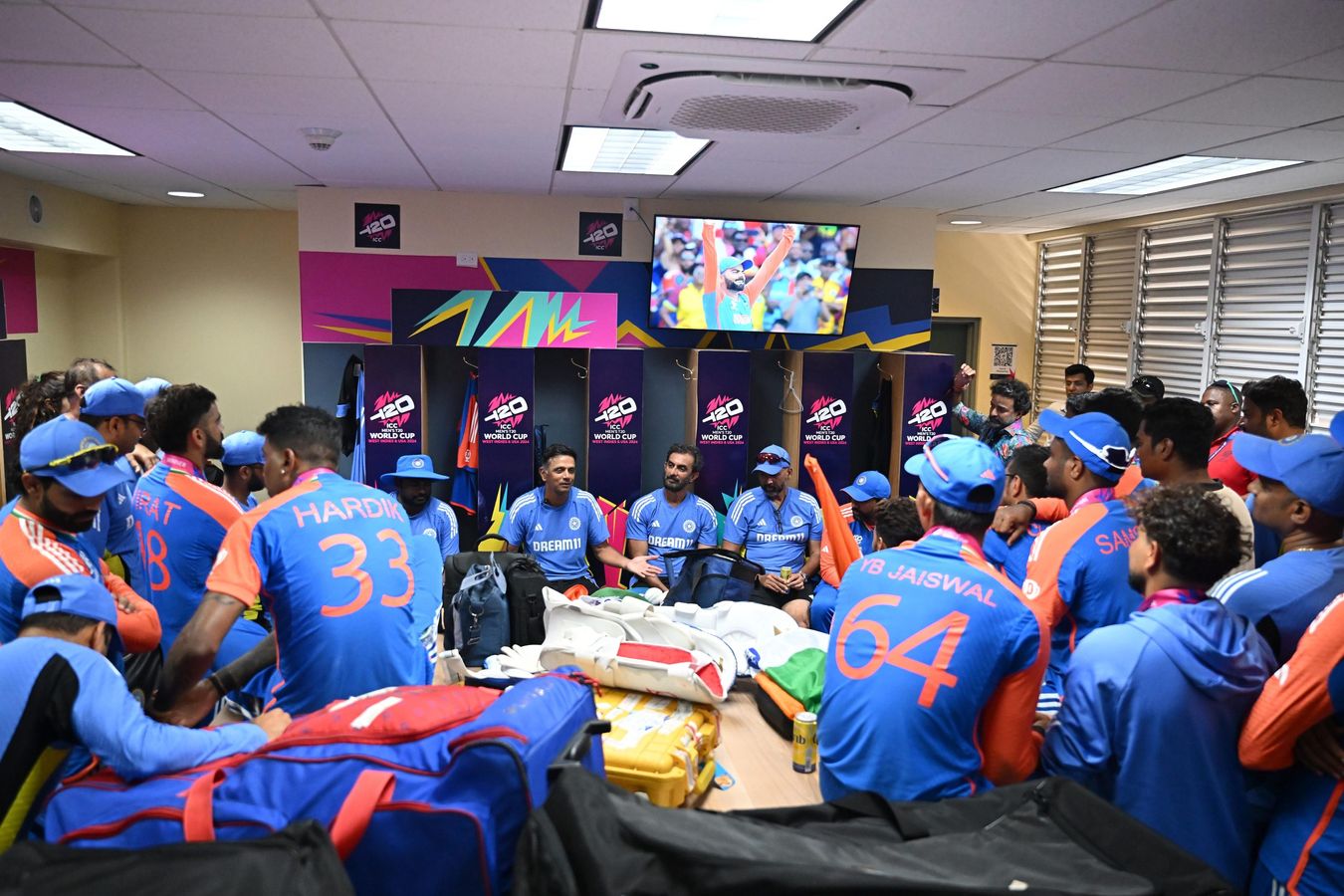
About an hour before the match, the team meets, and the captain talks. The head coach speaks first, and he reminds the team of the plan: who bowls to whom, who fields where, and what the target is. Then the captain speaks, and he keeps it simple: he tells the team to play their game, to trust each other, and to enjoy the match. MS Dhoni was famous for keeping it simple: he told Joginder Sharma, before the last over of the 2007 World Cup final, not to worry about the outcome, and Joginder bowled the over, and India won. The team meeting is not long, because the players already know the plan, and they do not need to be told twice. It ends with a huddle, and a shout, and the team walks out to warm up.
The Warm-Up: An Hour Before the Toss
The warm-up starts about an hour before the match, and it is the most important part of the day. The players stretch, they run, they throw, and they catch, and the bowlers bowl in the nets, and the batters bat in the nets. The fielding coach sets up drills, and the players practice the catches they might need in the match. The warm-up is not just physical. It is mental, because it is the time when the players get into the zone, and they start to focus on the match. The captain watches the warm-up, and he watches who is sharp, and who is not, and he makes his final decision about the team.
The Team Sheet: Before the Toss
The team sheet is filled in before the toss, and it is handed to the opposition team and the match officials. It lists the 11 players who will play, and the substitutes, and it is the final decision. Once the team sheet is handed in, the team cannot change, except for a concussion substitute, or an Impact Player in the IPL. The captain and the coach decide the team, and they decide it based on the pitch, the opposition, and the form of the players.
The toss takes place 30 minutes before the scheduled start, and the two captains walk out to the middle, with the match referee, and the coin is flipped. The captain who wins the toss decides whether to bat or bowl, and he tells the team, and the team knows the plan. In T20 cricket, the captain usually chooses to bowl first, because of the dew, and because having a target on the board takes pressure off the chasing batsmen.
The First Innings: The Dugout
During the first innings, the dressing room is empty, because the players are on the field, or in the dugout. The dugout is the bench outside the dressing room, where the players who are not batting sit, and watch, and wait. The captain is on the field, and the coach is in the dugout, and they talk on walkie-talkies, because the players and the team management are allowed to use walkie-talkies in the PMOA. The analyst is in the dugout too, and he watches the match, and he sends messages to the captain about the opposition.
The Innings Break: 10 Minutes
The innings break in a T20 match is 10 minutes, and it is the busiest 10 minutes of the day. The fielding team comes back to the dressing room, and they drink water, and they eat, and they rest. The batting team goes out to the middle, and they take guard, and they get ready. The captain talks to the team, and he tells them the target, and he tells them the plan. The coach talks to the bowlers, and he tells them who bowls when. The physio checks the players who are injured, and the analyst gives the captain the data on the opposition. 10 minutes is not long, but it is enough, because the team already knows the plan, and they just need a reminder.
The Chase: The Dugout Watches
During the chase, the dugout is the most tense place in the ground. The players who are not batting sit in the dugout, and they watch every ball, and they cheer every boundary, and they groan every wicket. The captain is in the middle, and the coach is in the dugout, and they talk on the walkie-talkie. The analyst watches the data, and he tells the captain what the opposition is doing. The Impact Player decision is made in the dugout, because the captain and the coach decide when to bring in an extra batter or an extra bowler, and the decision can win or lose the match.
The Dugout: The Team’s Heart
The dugout is the team’s heart, because it is where the players who are not playing support the players who are. When a batter hits a six, the dugout erupts. When a bowler takes a wicket, the dugout erupts. When a catch is dropped, the dugout goes quiet. The dugout is where the team lives, and it is where the match is felt, ball by ball. In the 2024 World Cup final, the Indian dugout watched Hardik Pandya defend 16 runs in the last over, and Suryakumar Yadav take a stunning catch, and they erupted, because India had won the World Cup.
After the Match: Handshakes, Press and Ice Baths
After the match, the players shake hands, and they go back to the dressing room. The winners celebrate, and the losers sit quietly, and the physio works on the injured players. The captain and the Player of the Match go to the press conference, and the rest of the team goes to the ice baths, to recover.
The Ice Baths: Recovery Starts Now
The ice baths are the first step of recovery, and they start minutes after the match ends. The players sit in cold water, to bring down the swelling in their legs, and to help their muscles recover. The physio checks every player, and he notes who is sore, and who needs treatment the next morning. Recovery is part of the job, because there is often another match in two days, and the players need to be ready. The phones are handed back, and the players check their messages, and they call their families. The dressing room is loud after a win, and quiet after a loss, but it is always the same: it is where the team is, and it is where the match ends.
How Fans Followed the Match Day With a SkyExchange ID
The dressing room is closed to fans, but the match is not, and fans follow every ball, from the toss to the last over. A fan who watches the toss knows the team, and a fan who watches the dugout knows the mood, and a fan who watches the last over knows the result. Fans who follow the game with a SkyExchange ID will have watched a match, and wondered what happens inside the dressing room, and this blog has shown them.
A SkyExchange ID online is one way fans kept up with the live scorecard, the team totals, and the key moments in each match. Live updates mattered in a T20 match, when a team’s fortunes could change after a single over.
A SkyExchange login is the step fans use to access their account and check the latest match information. Fans should only use official platforms and keep their account details private.
Using a SkyExchange ID Online to Follow Live Matches
Fans can follow a match from anywhere, whether they are at home, travelling, or watching with friends. In a T20 match, that matters most when the match is being played, and every ball counts. Live updates helped them catch the key moments.
SkyExchange Login: Checking Scores, Squads and Updates
It is a simple, familiar process for people who follow cricket online regularly. For each game, that meant checking the playing eleven before the toss, following the live scorecard, and reading the match summary afterwards.
FAQs
What is the PMOA in cricket?
The PMOA is the Players’ and Match Officials’ Area, and it includes the dressing rooms, the dugouts, the medical room, the warm-up area, the players’ tunnel, and the dining area. Under the ICC’s rules, from the moment the first player enters the PMOA on the day of an international match, right through until the formal conclusion of the day’s play, no person is allowed to use or carry any mobile device in the PMOA, except for the team manager, who may carry a phone for cricket operations.
When does the toss take place in a T20 match?
The toss takes place 30 minutes before the scheduled start of the match. The two captains walk out to the middle, with the match referee, and the coin is flipped. The captain who wins the toss decides whether to bat or bowl first, and the team sheet, which lists the 11 players, is handed to the opposition team and the match officials before the toss.
How long is the innings break in a T20 match?
The innings break in a T20 match is 10 minutes. The fielding team comes back to the dressing room, and they drink water, and they eat, and they rest. The batting team goes out to the middle, and they take guard. The captain tells the team the target, and the coach tells the bowlers who bowls when. It is a short break, but it is enough to reset for the second half.
What happens in the dugout during a T20 match?
The dugout is the bench outside the dressing room, where the players who are not batting sit, and watch, and wait. The captain is on the field, and the coach is in the dugout, and they talk on walkie-talkies. The analyst watches the match, and he sends messages to the captain. The Impact Player decision is made in the dugout, and the dugout is where the team supports each other, ball by ball.
How did fans follow the match day and live scores online?
Many fans followed live scores on their phones. A SkyExchange ID online helped supporters check the live scorecard and key moments in one place, while a SkyExchange login gave them access to follow updates during the match, including the toss and team announcements.
Conclusion
A T20 dressing room on match day is a busy place, from the moment the players arrive, three hours before the first ball, to the moment they leave, hours after the last one. The phones go away, because the ICC’s PMOA rules ban mobile devices from the moment the first player enters, until the end of play. The team meets, and the captain talks, and the players warm up, and the team sheet is handed in before the toss. The toss takes place 30 minutes before play, and the dugout watches the match, and the innings break is 10 minutes, and the chase is watched from the dugout. After the match, the players shake hands, and they go to the ice baths, and the phones are handed back.
