

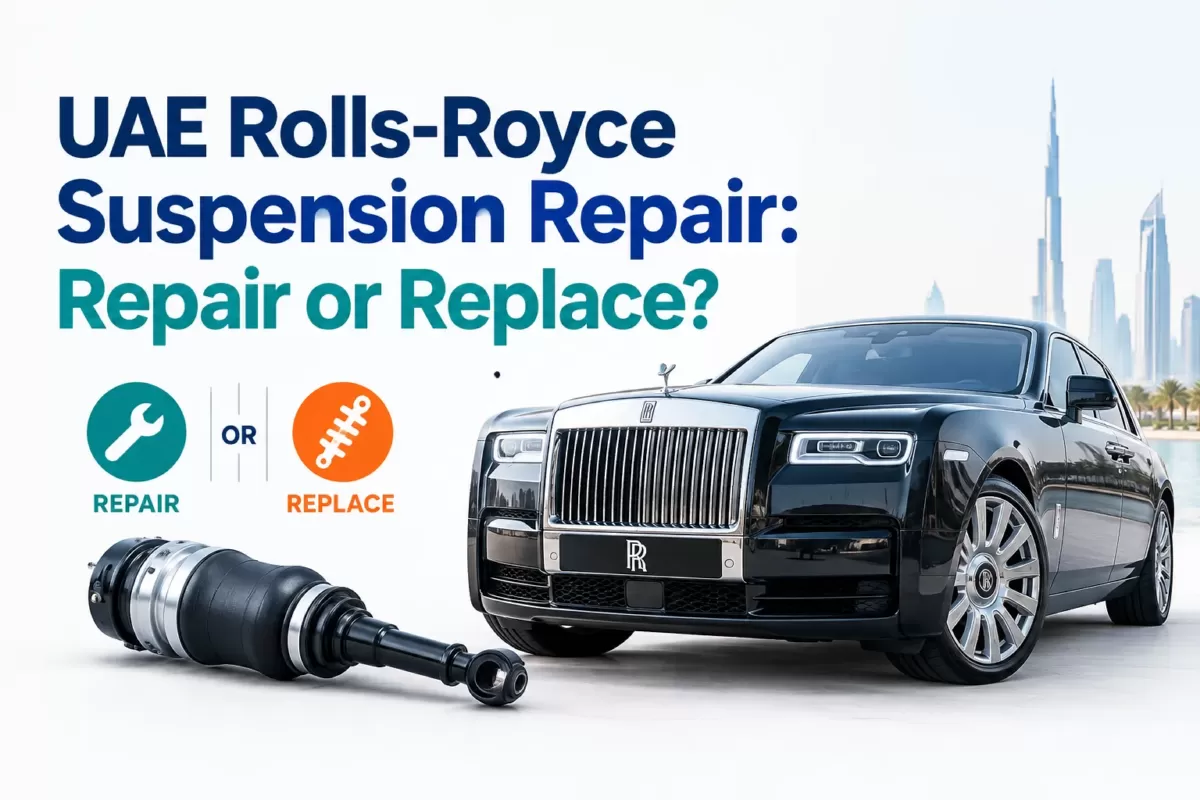
 A change in ride height, a suspension warning or a harsher ride can leave a Rolls-Royce owner in the United Arab Emirates wondering whether a repair will be enough or a component needs replacing. The answer depends on what has failed, what an inspection finds and how the suspension system responds to diagnostic checks. There is no sound universal rule based on one symptom alone.
This article explains what a workshop may check before recommending Rolls-Royce suspension repair, when a local repair may be considered, and why replacement or further diagnosis could be more appropriate. If the vehicle is sagging noticeably, showing a warning or handling differently, ask a qualified technician for advice before driving it. A remote description cannot confirm that it is safe to use.
Rolls-Royce suspension symptoms and the first inspection
Start by noting exactly what you have observed. Does one corner sit lower after the car has been parked? Does the vehicle take longer than expected to settle, or has a warning indicator appeared? Is the ride or handling different from its usual behaviour? These details help the technician understand when the symptom occurs and whether it is consistent.
A workshop will typically begin with a visual assessment and a conversation about the vehicle’s behaviour. Depending on the model and the reported issue, the inspection may include the suspension components, visible air lines and connections, the condition around the affected area, and the vehicle’s ride height. A single low corner, for example, is a clue to investigate, not proof that one particular part has failed.
Where the vehicle has air suspension and electronic controls, diagnostic checks can help identify stored faults and show whether the system is reporting an issue. The results need to be interpreted alongside the physical inspection. A warning code points the technician towards an area to check, but it does not necessarily identify the root cause or prove that a named component must be replaced.
In the UAE, heat, dust and road impacts can be relevant background when discussing a vehicle’s use. They are not a diagnosis. The technician still needs to assess the individual car, its specification and the evidence found during inspection rather than assume the climate caused the fault.
When repair may be considered, and when replacement may be needed
A repair may be considered when inspection identifies a localised fault and the affected part is serviceable. The technician should explain what has failed, what the proposed repair involves and whether related components need checking. The suitability of repair depends on the actual condition of the part and the requirements of that vehicle’s suspension system.
Replacement may be more appropriate if a component is damaged, worn beyond a suitable repair, or unable to operate as intended. It may also be considered when the inspection identifies a fault that cannot be addressed reliably through a local repair. This does not mean every Rolls-Royce suspension problem calls for a complete assembly or a pair of parts. The scope should follow the findings, not a blanket rule.
To understand the factors that can shape the work and its cost, see this rolls royce suspension repair guide. It offers supporting context on suspension components, diagnostics and system requirements. It is not a diagnosis for an individual vehicle, so the decision should still be based on the inspection and the technician’s explanation of the findings.
Ask for a written breakdown that distinguishes the confirmed fault from any recommended additional work. A clear quote should explain which component is being repaired or replaced, why that option is proposed, and whether parts or follow-up checks are included. If the cause has not yet been confirmed, ask what further testing is needed before approving work. This helps avoid replacing parts based only on a symptom or an unexplained fault code.
After work, the technician may need to clear or recheck diagnostic faults and verify the suspension’s operation. If a component change affects ride height or geometry, calibration or wheel alignment may also be relevant, depending on the vehicle and repair. Ask what checks apply in your case and request a clear account of what was verified. The required steps are not identical for every model or fault.
Diagnosis, UAE workshop choices and your next steps
For Rolls-Royce suspension repair in the United Arab Emirates, look for a workshop that can explain its diagnostic process in plain language. Ask how it will assess the symptom, what inspection findings support the recommendation, and whether it will use appropriate diagnostic equipment and OEM-grade parts where required. A written quote and a direct explanation of repair versus replacement make it easier to weigh the options.
Smart Garage UAE is a Sharjah-based premium technical workshop offering air suspension repairs and wheel alignment. For owners in Sharjah and Dubai, it is reasonable to ask whether the workshop can assess the specific Rolls-Royce model and reported fault, what the inspection covers, and what checks are recommended after the work. Confirm the proposed scope and pricing in writing before authorising repairs.
Useful questions to ask the technician include:
- What did the inspection find, and which findings are confirmed?
- Is the proposed work a repair or a replacement, and why does that suit this component’s condition?
- Are there related parts or system checks that could affect the diagnosis?
- Will diagnostic rechecks, calibration or wheel alignment be needed after the work?
- What will the written quote cover, and what would require separate approval?
Do not treat a warning indicator, a low ride height or an unusual change in handling as something to diagnose by guesswork. Ask a qualified technician to assess the vehicle. If its behaviour raises a safety concern, seek advice before driving and ask about a suitable way to have it inspected.
The practical distinction is simple: repair is an option only when the affected component and system can support it; replacement is considered when the inspection shows repair is not suitable. A careful diagnosis, a specific explanation and a written scope help you make that decision without assuming the most extensive job is automatically the right one.