

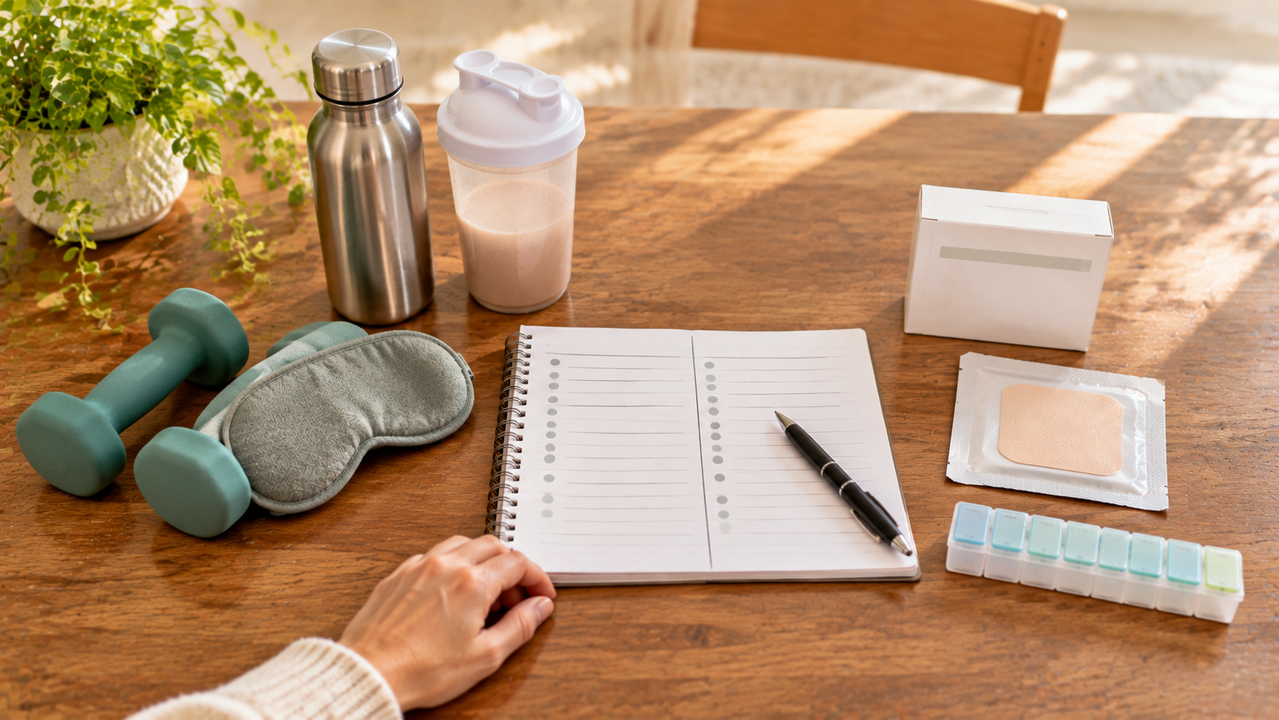
| Lifestyle changes help almost everyone with menopause or low testosterone symptoms, but they don’t replace hormone treatment when a deficiency or bothersome hot flashes persist. BHRT is a medical option for specific situations, not a shortcut. The best plan usually combines both, guided by an evaluation that checks for other causes first. |
It’s a fair question: should you try sleep, exercise, and diet first, or go straight to hormones? Most people ask it quietly, worried that either answer sounds like a failure. Some people feel pressure to choose one side. The evidence points to a more practical answer. Lifestyle forms the foundation, and hormone therapy is a targeted tool when the foundation isn’t enough. This guide explains what each can and can’t do, and how to decide.
Weight is the goal that causes the most confusion. THRYVE’s guide to bioidentical hormone replacement therapy and weight reviews what hormone therapy actually does for body weight and body composition during the menopausal transition. It’s worth reading before you decide what you expect from either approach.
What Lifestyle Changes Can Do
Lifestyle changes matter at every stage, and they carry little downside. Sleep, activity, nutrition, and stress all affect how you feel.
For hot flashes, experts quoted by HealthDay say a high-carbohydrate diet can worsen them, as can alcohol close to bedtime. Tracking your own triggers costs nothing and sometimes helps. NICE also lists cognitive behavioral therapy among the nonhormonal approaches for menopause symptoms.
Body composition is where lifestyle matters most. THRYVE’s weight review notes that the menopausal transition shifts fat toward the abdomen and reduces lean mass, independent of age. That points toward resistance training and adequate protein, and away from aggressive calorie cutting without strength work.
For men, the AUA says all men with testosterone deficiency should be counseled on lifestyle changes as part of treatment. Sleep problems, weight, and alcohol can lower testosterone or mimic its symptoms. Fixing them sometimes makes treatment unnecessary.
What Lifestyle Changes Can’t Do
Lifestyle has limits, and it’s worth knowing them. The Menopause Society says hot flashes and night sweats affect up to 80% of women during menopause and can last a decade or more. For bothersome symptoms, diet and exercise alone often don’t get you there.
Three situations commonly call for more than lifestyle:
- Hot flashes or night sweats that disrupt your sleep and daily life
- Bone loss, which hormone therapy prevents and lifestyle alone doesn’t fully address
- Confirmed testosterone deficiency in men, meaning symptoms plus two consistently low early-morning tests
In those cases, lifestyle supports treatment. It doesn’t replace it. Saying so isn’t a criticism of lifestyle work, which still improves how you feel and how treatment performs.
What BHRT Is, and Isn’t
Bioidentical describes a hormone’s molecular structure. It says nothing about whether a product is FDA-approved. Some bioidentical hormones, such as estradiol and micronized progesterone, are FDA-approved. Others are compounded and don’t go through FDA premarket review. ACOG’s 2023 consensus says compounded versions shouldn’t be prescribed routinely when FDA-approved ones exist.
BHRT also has clear limits on what it treats. A 2026 clinical review found that current evidence doesn’t support hormone therapy as a weight loss treatment, and the International Menopause Society found it isn’t associated with increased weight. A 2026 review in American Family Physician adds that hormone therapy shouldn’t be used solely to prevent chronic conditions. It treats specific symptoms and prevents bone loss.
A Whole-Picture Evaluation
Hormone symptoms rarely have a single cause. THRYVE’s bioidentical hormones and functional medicine care looks at your history, lifestyle, nutrition, symptoms, and clinical findings together. Testing is selected only when it answers a clinical question, and more testing isn’t automatically better. The service doesn’t replace primary care, and your provider will tell you when you need a referral or an in-person exam.
That broader view helps you decide how much to rely on lifestyle and when to consider treatment. It also keeps you from paying for a hormone program before anyone has checked whether hormones are the issue.
Side by Side
| Goal | Lifestyle alone | BHRT, when appropriate | Evidence note |
| Hot flashes and night sweats | Trigger tracking and some behavioral approaches may help mildly | Most effective treatment for these symptoms | The Menopause Society supports hormone therapy for healthy women under 60 or within 10 years of menopause |
| Sleep | Strong foundation | Helps when hot flashes drive the sleep loss | Check for sleep apnea and thyroid problems first |
| Bone health | Supports bones | Prevents bone loss | Other bone treatments exist if hormones don’t fit |
| Body composition | Resistance training and protein matter most | May attenuate some changes but isn’t a weight loss treatment | The weight on the scale tracks age more than the transition |
| Low testosterone symptoms | Sleep, weight, and alcohol changes can raise levels | Considered for confirmed deficiency | The AUA calls for two early-morning tests and symptoms |
| Weight loss | Core approach | Not supported as a weight loss treatment | A 2026 review found no support |
Combining Both
The most useful framing isn’t either-or. It’s sequence. Start with an evaluation that looks for other causes, such as thyroid disease, sleep apnea, anemia, and medication effects. Build the lifestyle foundation, and keep a log so you can see what it changes. Then add treatment where a clear indication remains.
That order matters because it protects you from two mistakes. One is starting hormones for symptoms that a sleep problem or thyroid condition explains. The other is white-knuckling through severe symptoms because you’ve been told lifestyle should be enough.
A Practical Starter Plan
If you want to begin with lifestyle, make it specific so you can judge it:
- Fix a consistent sleep window and track how often you wake at night
- Add resistance training two to three times a week, and eat enough protein to support it
- Note your personal triggers, such as late alcohol or heavy carbohydrate meals
- Log symptoms for a few weeks so you have a baseline
- Book an evaluation if nothing shifts, or sooner if symptoms are severe
A baseline log is the part people skip. Without it, you can’t tell whether a change helped, and neither can your provider.
When Lifestyle Alone Isn’t Enough
Talk to a provider soon if any of these apply:
- Symptoms disrupt your sleep, work, or relationships despite consistent lifestyle effort
- You have heavy, persistent, or unexplained vaginal bleeding
- You’re a man with persistent low energy, low libido, or poor recovery that hasn’t improved with sleep and weight changes
- You have chest pain, sudden shortness of breath, or stroke symptoms, which need emergency care
Don’t wait for lifestyle changes to “have enough time” when symptoms are severe. Getting evaluated doesn’t commit you to treatment, and it often reveals a simpler explanation than you expected. Either way, you leave with information you didn’t have.
BHRT and Lifestyle Care in San Antonio
San Antonio offers gynecology practices, men’s health clinics, integrative providers, and telehealth services. Ask any provider how they decide who needs treatment, and how they support lifestyle changes alongside it.
THRYVE Wellness Clinic is a provider-led telehealth service offering virtual care to eligible patients across San Antonio and Texas. It serves Stone Oak, Alamo Heights, the Medical Center area, Alamo Ranch, Helotes, and the South Side. Visits happen by secure video, with at-home collection for eligible tests and addresses. You can see how bioidentical hormones San Antonio TX care works on THRYVE’s area page, and confirm that your address qualifies.
Frequently Asked Questions
Can lifestyle changes replace BHRT?
Sometimes for mild symptoms, and often as the first step. For bothersome hot flashes, bone loss, or confirmed testosterone deficiency, lifestyle supports treatment but may not replace it. An evaluation tells you which situation you’re in.
Does BHRT help with weight loss?
No. A 2026 clinical review found current evidence doesn’t support hormone therapy as a weight loss treatment. It also isn’t associated with weight gain. Resistance training and protein matter more for body composition.
How long should I try lifestyle changes first?
There’s no fixed timeline. If symptoms are mild, a few consistent weeks is reasonable. If they’re severe, or if you suspect a deficiency, get evaluated now instead of waiting.
Key Takeaways
Lifestyle is the foundation, and hormone therapy is a targeted tool. BHRT isn’t a weight loss or anti-aging treatment. Rule out other causes before assuming hormones are the problem. Combine approaches in sequence. Severe symptoms deserve an evaluation, not a long wait.
The Bottom Line
You don’t have to choose between lifestyle and BHRT. Start with an evaluation, build the foundation, and add treatment when the evidence and your symptoms point to it. If you’d like help figuring out where you stand, contact THRYVE about bioidentical HRT and ask whether telehealth fits your needs.
